

Oasis Commercial Advisors
Who we are
What we do
Who we serve
Client work
Insights
Contact Book a Clarity Call
Leadership and readiness

Investor and board readiness

Investors and acquirers want a commercial story that survives diligence: pipeline by stage, a market size with the arithmetic shown, and a hiring plan with gates. We build that deck.

The commercial story has to survive diligence


A diligence team reads the closed-lost column before it reads the pitch deck, and the two have to tell the same story.

Our team has been inside three acquisitions worth $6.3B in total. The commercial questions an acquirer or a Series B lead asks are consistent: which segment is converting and at what rate, how long the cycle is by stage, what the next ten accounts are and why, what the second rep will cost and when they are earned.

Investor and board readiness answers those questions in a commercial review deck built for the diligence room: pipeline analysis by buying stage, market sizing with every source cited and the arithmetic on the page, KPI dashboards the board can read without a translator, and a growth roadmap with hiring gates on it. We also rehearse the founder on the questions, including the ones asked after the meeting.

Design phaseOptimize phase

What will a Series B lead or an acquirer ask about our commercial system that we cannot answer today?

How do we size the market in a way a diligence team will accept?

What should the board see every month so the raise is not a surprise?

Can you get our pipeline and our story to agree before the data room opens?

Where the numbers and the story must agree

Reconcile the pipeline and the story

The first week puts the CRM export beside the pitch deck. Where the deck says one segment and the closed-won column says another, the deck changes. Where the forecast assumes a six-month cycle and the stages show nine, the roadmap changes. The diligence team will find the gap; we find it first.

Size what you can reach

For a board, the market size is assembled from volumes, sites of service and contract access, and every input is cited with the math visible. The reachable number is separated from the total. It is smaller than the pitch deck's number and far more credible.

Define the KPIs once

We define six to eight numbers in writing and pull them from the CRM the same way every month: accounts opened, champions secured, committee submissions, contracts, cycle time by stage, pipeline coverage. The board sees the same chart every meeting, with the trend. The diligence team gets the same dashboard with 12 months of history.

Rehearse the questions after the meeting

Investors ask one set of questions in the room and a harder set of their advisors afterwards: why did these deals die, why this rep, why this segment. We rehearse both sets with the founder, using the real closed-lost data, so the answers are the same in the room and in the follow-up.

Getting the commercial story ready for diligence

Analyze the pipeline by stage

Every open and closed deal mapped to the buying stages, with conversion and cycle time per stage, so the forecast is defensible.

Size the market with sources

Volumes, sites of service and contract access, every figure cited, the arithmetic shown, the reachable number separated from the total.

Build the KPI dashboard

We define the six to eight numbers the board should see monthly, track them from the CRM and show the trend.

Write the growth roadmap

Segments, regions, hires and launches by quarter, with the gate attached to each step and the capital required.

Rehearse the founder

The commercial questions investors ask in the room and the ones they ask their advisors afterwards, worked through before the meeting.

What you get

A board-ready commercial review deck with pipeline analysis, market sizing, KPI dashboards and a growth roadmap, built to be dropped into a data room.

DesignOptimize
  • Pipeline analysis by buying stage with conversion and cycle time
  • Market sizing with sources and arithmetic shown
  • Monthly KPI dashboard definitions for the board
  • Growth roadmap with hiring gates and capital required

Who this is for

  • A raise inside 12 months and a commercial narrative that no outside diligence team has tested yet
  • A board that sees a different pipeline number every meeting
  • An exit conversation where the acquirer's diligence team will read every closed-lost reason code
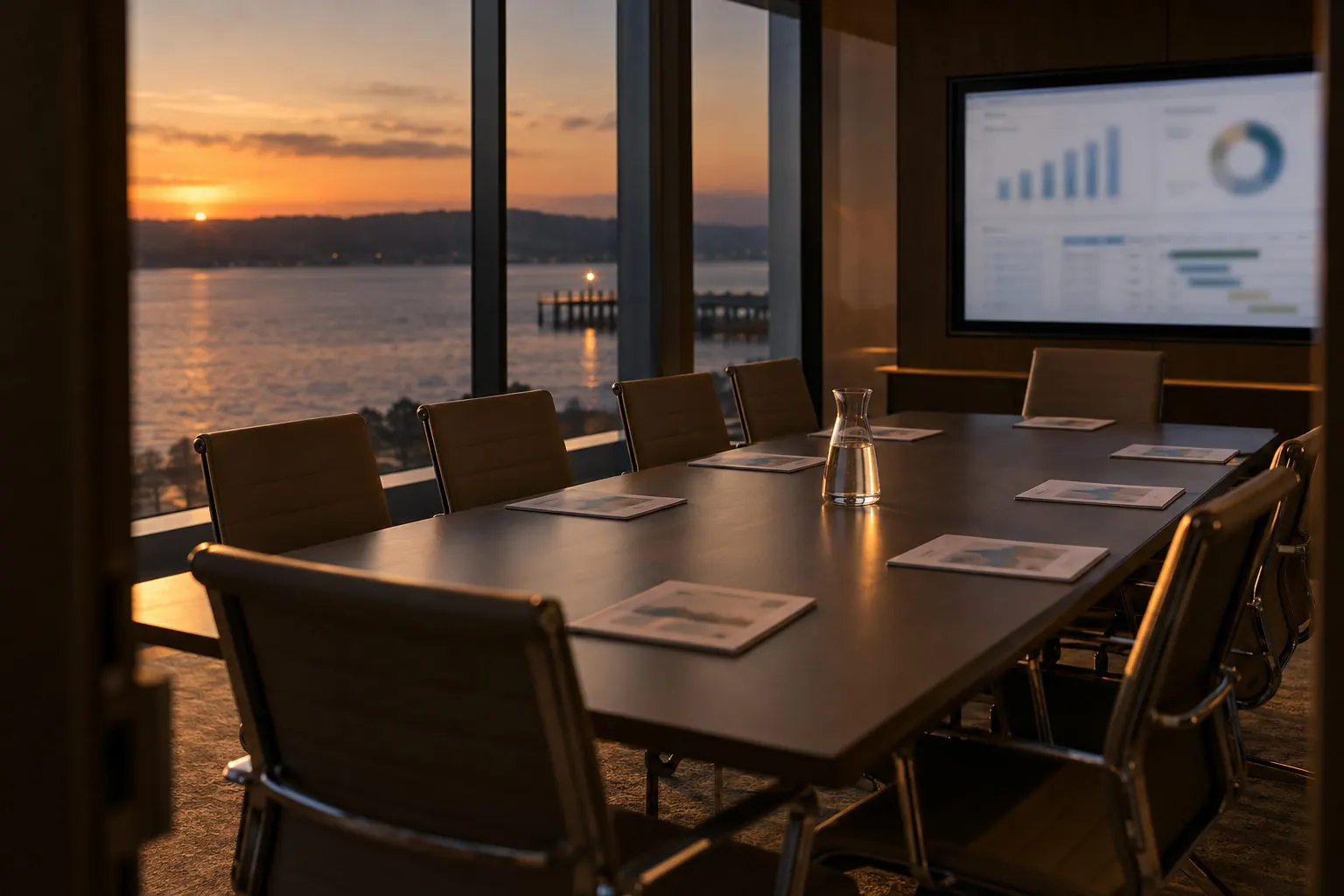
Boardroom set for a meeting with a dashboard on the wall screen

A commercial system an outsider can read

All client work

Cardiology AI company, Series A stage

Situation

The company had early physician interest and needed a commercial system an acquirer could see working without the founder's network.

What we did

We delivered the complete go-to-market build, from market intelligence through a scored practice list, messaging, customer deck and sales playbook, and together they made the commercial system clear to an outside reader.

Result

The company was acquired six months after our engagement.

Read the engagement

Joining the investor meeting, and other questions

How long does investor and board readiness take?

The commercial review deck, the KPI definitions and the growth roadmap take four to six weeks if the pipeline data exists. If the CRM does not track stages, we add two to three weeks to rebuild the history from deal notes. Founder rehearsal happens in the final week and again before the meeting.

What do we need to hand over at the start?

Hand over a full CRM export including closed-lost, the current investor deck, the financial model, board decks from the last year, and the founder's time for working sessions. We also want 15 minutes each with two or three lost buyers, because their answers are what the diligence team will hear.

Will you join the investor meeting?

If it helps, yes, as the commercial advisor who built the review. More often we prepare the founder and the deck and stay out of the room. We do not make investor introductions for compensation; where we introduce one, it is because the fit is real.

Can this run as an ongoing board service?

Yes. After the review, some clients keep a monthly cadence: we refresh the KPI dashboard from the CRM, update the roadmap against the gates, and prepare the commercial section of the board deck. That keeps the diligence story current, so the next raise or exit conversation starts from a document that already exists.

What does the result look like?

You get a deck and a dashboard that a diligence team can read without a call. The companies our team has helped build were acquired for a combined $6.3B, and the common thread was a commercial system an outsider could see repeating. For a cardiology AI client, the go-to-market build was in place when the company was acquired six months after our engagement.

Oasis Commercial Advisors

St. Petersburg, Florida

Every engagement starts with a conversation. You'll hear back within one business day.

  • A reply within one business day
  • A 30-minute Clarity Call, free
  • A written next step, whether or not we work together

Tell us what you are working on

Thank you. Your message is in. You'll hear back within one business day.

Or email clarity@oasiscommercialadvisors.com. Nothing you send is shared outside Oasis.

Start with a Clarity Call

Tell us when the raise or the exit conversation is; we will reply within one business day and spend a free 30-minute call on what diligence will ask first.